

In North Carolina, spring can arrive fast—and so can the demand on your irrigation system. A professional spring turn-on service (also called a spring startup) helps ensure your sprinkler system is activated safely, checked for winter damage, calibrated for efficiency, and programmed for the season ahead. Whether you manage a home, HOA, or commercial property, a proper spring turn-on helps protect your system, reduce water waste, and support healthier turf and landscaping.
Table of Contents
- What Is a Spring Turn-On Service?
- Why Spring Turn-On Services Matter in North Carolina
- When to Schedule a Spring Turn-On in North Carolina
- What’s Included in a Professional Spring Startup
- North Carolina-Specific Considerations
- Benefits of Professional Spring Turn-On Services
- Quick Homeowner Checklist Before Your Appointment
- FAQ: Spring Turn-On Services in NC
What Is a Spring Turn-On Service?
A spring turn-on service is the process of bringing your irrigation system out of winter dormancy and back into full operation. Done correctly, it includes controlled pressurization of the system, inspection of key components, zone-by-zone testing, sprinkler head adjustments, and seasonal programming of your controller.
The goal is to avoid damage (especially from sudden pressure changes), identify leaks or broken parts early, and make sure your system waters evenly and efficiently.
Why Spring Turn-On Services Matter in North Carolina
North Carolina’s spring weather is unpredictable: warm stretches can arrive early, but late cold snaps still happen. That variability can expose weaknesses in irrigation systems—especially if there was any leftover water in lines or fittings. A professional startup helps catch issues before they become expensive mid-season breakdowns.
- Protects your system: gradual pressurization helps prevent cracked fittings and sudden pipe failures.
- Improves coverage: winter shifting and soil movement can misalign heads and create dry spots.
- Saves water: a tuned system reduces overspray, runoff, and wasted watering.
- Supports healthier landscapes: consistent watering helps turf green up and protects new plantings.
When to Schedule a Spring Turn-On in North Carolina
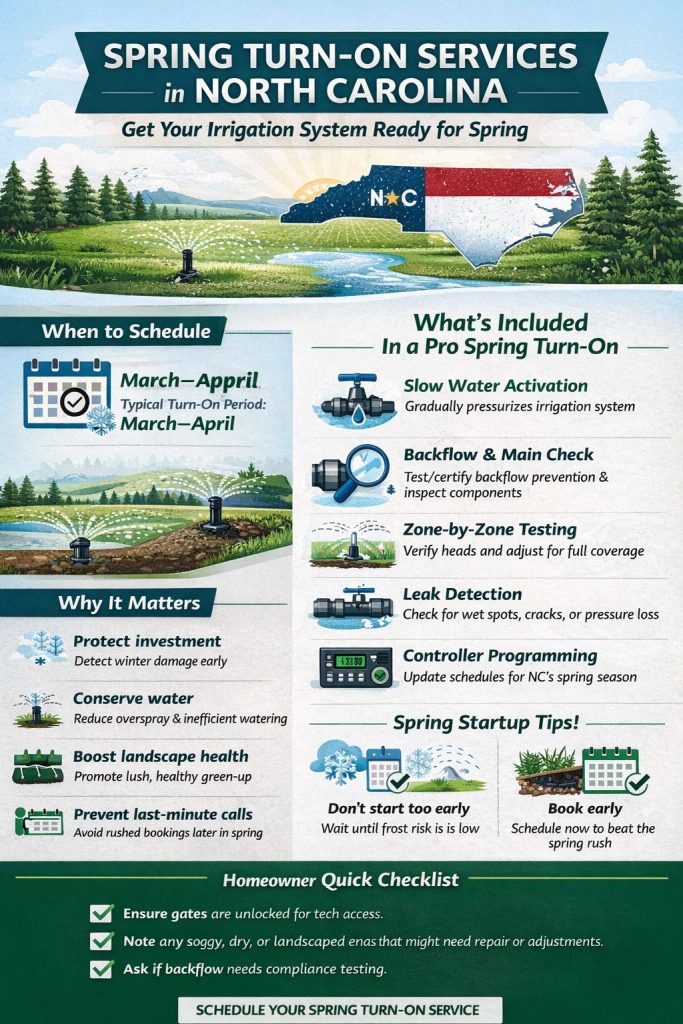
Most North Carolina properties schedule spring turn-ons when overnight temperatures are consistently above freezing and the risk of hard frost is low. In many areas, that window commonly lands between March and April, though timing can vary by region and year.
Rule of thumb: Avoid turning on the system during a warm week if there’s still a realistic chance of a hard freeze. Starting too early can expose underground pipes and backflow assemblies to damage.
Because spring is peak season for irrigation companies, it’s smart to book early—especially for HOAs and commercial sites.
What’s Included in a Professional Spring Startup
A thorough spring turn-on service typically includes:
- Controlled Water Activation
The main supply is opened slowly to pressurize the system safely and reduce the risk of water hammer. - Backflow / Main Components Check
Visual inspection for leaks, cracks, and proper assembly condition before full operation. - Zone-by-Zone Testing
Each zone is run to identify broken heads, low pressure, clogged nozzles, stuck valves, and coverage gaps. - Head Alignment & Spray Pattern Adjustments
Heads are leveled, directed, and adjusted to reduce overspray onto sidewalks/driveways and improve uniformity. - Leak Identification
Technicians watch for soggy spots, bubbling, or rapid pressure drop that may signal underground leaks. - Controller Programming
Seasonal schedules are updated, and rain sensor / smart controller settings are reviewed for efficient watering.
North Carolina-Specific Considerations
1) Spring Temperature Swings
NC can shift from cool nights to warm afternoons quickly. Your startup schedule should reflect real conditions, not the calendar. A professional can help you time activation so you don’t risk freeze-related damage.
2) Soil Types & Drainage
From clay-heavy soils to sandy areas, infiltration rates vary across the state. Proper nozzle selection, run times, and cycle/soak scheduling can dramatically reduce runoff and help water reach roots.
3) New Landscaping & Seasonal Plantings
Spring is prime planting season in North Carolina. A properly tuned irrigation system prevents underwatering on new plant material and reduces disease risk from overwatering.
Benefits of Professional Spring Turn-On Services
- Fewer surprise repairs: issues are found early—before they cause major leaks or turf damage.
- Better efficiency: correct head spacing and spray direction reduces water waste.
- Improved landscape health: even coverage prevents brown patches and stress.
- Longer system life: minimizing pressure shock and catching wear early protects components.
- Convenience: you start the season confident your system is ready.
Quick Homeowner Checklist Before Your Appointment
- Make sure gates are unlocked and technicians can access the backflow and controller.
- Clear mulch, leaves, or debris from valve boxes and around heads where possible.
- Note any areas that stayed wet last season (possible leaks) or areas that dried out (coverage issues).
- If you changed landscaping, flag it—new beds often require nozzle or schedule adjustments.
FAQ: Spring Turn-On Services in NC
Is it okay to turn my sprinklers on myself?
You can, but many problems come from turning the system on too quickly or missing damage until it becomes a bigger repair. A professional startup typically pays for itself by preventing leaks, water waste, and mid-season failures.
What if we get a late freeze after the system is turned on?
If a freeze is forecast after startup, you may need to shut the system off and protect exposed components (backflow assemblies are especially vulnerable). If you’re unsure, ask your irrigation provider for guidance.
How long does a spring turn-on service take?
Most residential systems take about 45–90 minutes depending on zone count, complexity, and whether repairs are needed. HOAs and commercial systems can take longer.
Need help scheduling your spring turn-on in North Carolina?
Book early to secure your preferred appointment window and start the growing season with confidence.